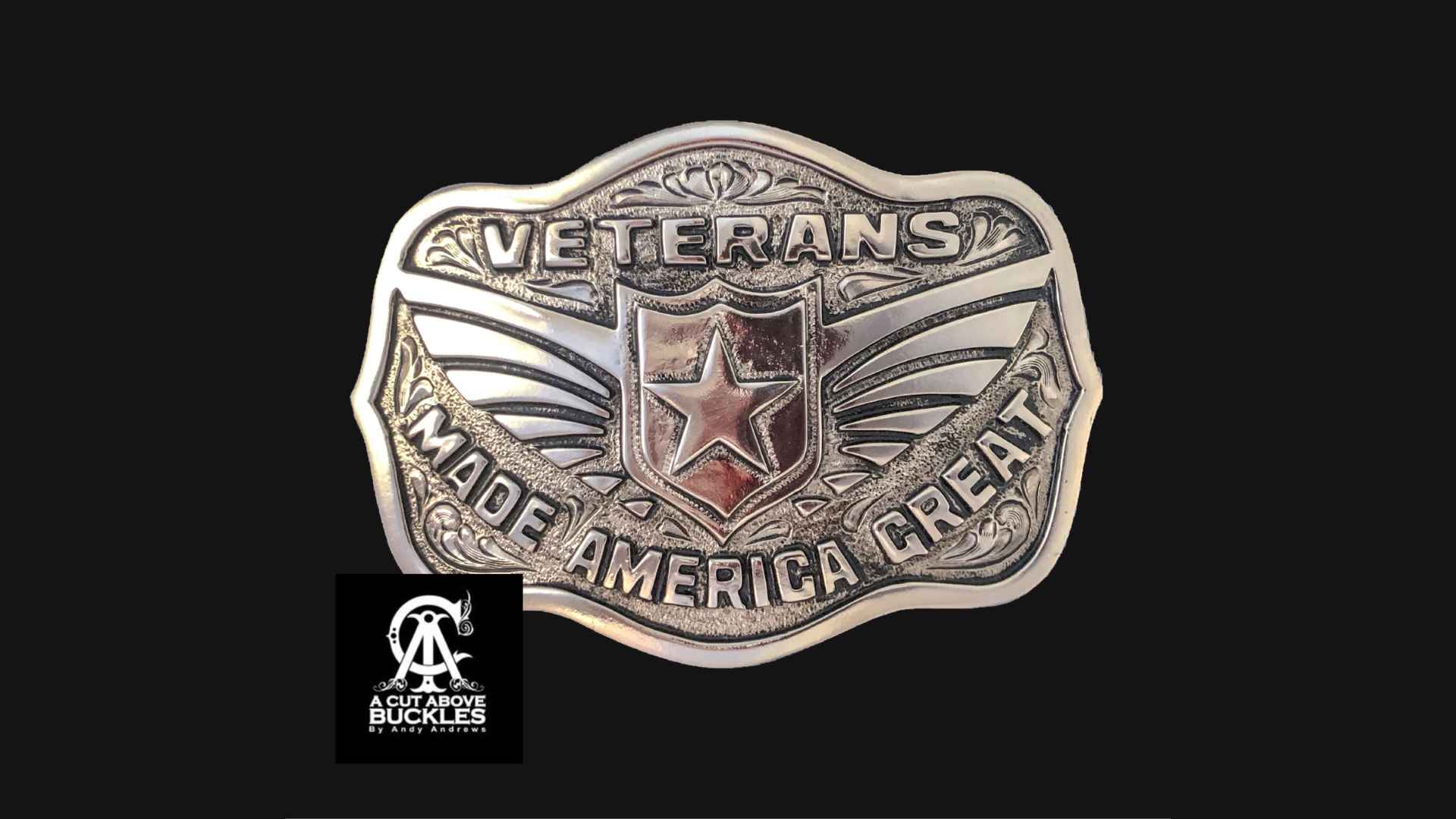
Walk into any western wear store and you will find dozens of belt buckles. Most of them look the part. Very few of them are actually silversmith-crafted pieces. The difference shows up immediately in person, but it can be hard to spot in a photo or a product listing without knowing what to look for.
A silversmith belt buckle is not just a buckle made from silver-toned metal. It is a piece built by hand through a skilled process that involves cutting, shaping, engraving, and finishing metal with tools and techniques developed over decades of practice. This guide breaks down what that process involves and how buyers can tell a true silversmith piece from a mass-produced imitation.
Most belt buckles sold online and at retail stores go through a casting and stamping process. Molten metal pours into a mold, cools, gets pulled out, and then gets a surface treatment before packaging. The whole sequence is fast, repeatable, and cheap. The results are consistent in the sense that every unit looks the same, which is exactly the problem.
Silversmith work does not start with a mold. It starts with flat metal stock and a design that gets built up piece by piece through hand cutting, shaping, and joining. The silversmith controls every line, every curve, and every surface treatment. No two pieces come out identical, even when working from the same design, because the human hand produces subtle variation that a machine cannot.
That variation is not a flaw. It is what gives a handcrafted piece its character. It is also what makes the engraving look different from every angle as light catches the cuts.
How belt buckles are made covers the full production process for both handcrafted and mass-produced pieces, which puts the differences into useful context.
The base metal a silversmith chooses sets the foundation for everything that follows. Different metals behave differently under tools, age differently over time, and carry different value.
The main metals used in silversmith belt buckles are:
Sterling silver, which is 92.5% pure silver and the benchmark material in fine western silversmithing. It takes engraving with exceptional clarity, develops a warm patina over time, and holds its structural integrity across decades of wear.
German silver, a copper, nickel, and zinc alloy with no actual silver content, despite the name. It is the most common base in mid-range western buckles. A skilled silversmith can produce excellent results with German silver, and it is a legitimate choice for buyers who want quality without the price of sterling.
Brass and copper, which appear in western silversmithing as accent metals in multi-tone designs. A silversmith might use a brass base with sterling silver overlay, or introduce copper tones into a border detail for visual contrast.
The western buckle metal types guide covers how each material looks, wears, and ages over time, which matters when evaluating a piece for long-term use.
Engraving is where silversmithing separates itself most clearly from mass production. A machine can etch a pattern onto a metal surface. A silversmith cuts it in.
Hand engraving uses hardened steel tools called gravers, pushed or driven by hand to remove metal from the surface in controlled cuts. The depth, width, and angle of each cut determine how the finished line reads. Cuts that are too shallow disappear over time. Cuts that are too deep can weaken the metal or distort the surrounding surface.
Depth is one of the first things an experienced eye notices when evaluating silversmith work. Good hand engraving has visible relief. The design sits at different levels on the surface, with background areas cut lower and raised detail catching more light. When you tilt a well-engraved buckle, the pattern shifts visually as light moves across it.
A machine-etched buckle sits flat. The pattern looks consistent from every angle because the surface barely changes depth. It might look sharp in a photo, but in hand it reads as printed rather than cut.
Scroll and floral patterns are the most common in western silversmithing. They require the silversmith to cut flowing, curved lines that connect without gaps or wobble. Each curve has to match the one adjacent to it in depth and width, or the pattern reads unevenly.
This type of work takes years to develop. A beginner silversmiths' scrollwork will show inconsistent line weights, uneven depth, and slight directional shifts where the hand changed position. An experienced silversmith produces lines that flow without interruption from one end of the frame to the other.
Two techniques that appear in higher-end silversmith buckles are overlays and inlays. Both are more labor-intensive than surface engraving and produce a distinctly different visual effect.
An overlay buckle uses two or more layers of metal. The top layer gets cut into a pattern, usually scrollwork or a specific design motif, and gets soldered or set onto a contrasting background layer. The result is a design that stands physically above the surface rather than just being cut into it.
Overlay work takes considerably more time than a single-layer engraved piece. The silversmith has to cut the overlay pattern cleanly, fit it precisely against the base, and solder it so no gaps appear at the edges. It is exacting work with no margin for imprecision.
Inlay places a different material into a recessed area cut into the base metal. Turquoise, coral, onyx, and other stones get set into precisely shaped channels. The stone or material sits flush with the surrounding metal surface when done correctly.
Getting an inlay to sit flush with no visible gap between the material and the surrounding metal requires careful preparation of the channel and precise sizing of the inlay piece. A gap, even a small one, signals rushed or imprecise work and will trap dirt and moisture over time.
The background of a silversmith buckle, the areas between engraved lines or design elements, gets treated in specific ways that dramatically affect the finished appearance. The most common background treatments in western silversmithing include:
Bright cut, where the background stays polished and reflects light sharply, creating high contrast between the recessed and raised areas
Frosted or matte, where the background gets textured with a tool to create a soft, non-reflective surface that makes raised engraving stand out without glare
Antiqued, where a dark patina gets applied and then partially removed from the raised surfaces, leaving the recessed areas dark and the high points bright
Hammered, where the background gets worked with a ball-peen or chasing hammer to create an irregular, textured surface with visual depth
Each background treatment is a deliberate choice made by the silversmith to suit the design. The same scroll pattern reads completely differently against a bright-cut background versus a frosted or antiqued one.
Knowing what to look for in person makes evaluating silversmith belt buckles much more straightforward. A few specific checks tell most of the story quickly.
Look at the engraving lines from a low angle. Clean silversmith work shows consistent depth and width with no chatter marks, which are the small irregular cuts that appear when a graver slips or the metal is worked too quickly. Look at the edges of the buckle frame. A quality piece has clean, consistent edge treatment with no rough spots or uneven filing. Check any stone settings for tight fit. A well-set stone does not shift or rattle. Run a fingernail across the engraved surface. The cuts should feel sharp and defined, not soft or rounded, which happens when a piece gets buffed too aggressively after engraving.
Weight is another reliable indicator. A hand-built silversmith piece uses more metal than a cast piece of similar dimensions. The added weight comes from the structural integrity of the construction, not filler.
Finishing is the last step and one of the easiest places for quality to drop. Overly aggressive buffing removes fine engraving detail. Uneven polishing leaves dull patches on a piece that should read uniformly bright. Dark patina applied unevenly looks splotchy rather than intentional.
A well-finished silversmith buckle has consistent surface sheen across all polished areas, crisp edges on the engraving, and any antiquing or patina applied with clear intention. The piece should look the same up close as it does from a foot away, which is the real test of even, controlled finishing work.
A true silversmith works with buyers to build pieces around specific ideas rather than pulling designs off a shelf. The design process involves understanding what the piece needs to communicate, who it is for, and what design elements carry the right meaning for that person or organization.
That conversation shapes every decision, from metal choice and buckle shape to engraving style and background treatment. Nothing gets produced until the buyer sees a proof and confirms every detail.
A Cut Above Buckles operates as a hands-on custom western belt buckle company where each piece goes through that design process from start to finish. The silversmithing expertise behind every piece comes from decades of working in this specific craft, not a generalist metalworking background.
To explore design options or start a conversation about a specific piece, visit the custom designs page and reach out with the details of your project.

© Copyrights 2026 A Cut Above Buckles


