Step into the workshop at A Cut Above Buckles, and you will hear more than just the hum of machinery. You will hear the rhythmic tap of a hammer, the hiss of a torch, and the scratch of a graver against metal. This is where tradition meets precision. It is where raw sheets of silver and bronze are transformed into heirlooms.
For many, a buckle is simply a piece of hardware that holds a belt in place. However, for those in the Western world, it is a badge of honor, a trophy, and a storyteller. Understanding how belt buckles are made helps you appreciate the true value of your purchase. It transforms a simple accessory into a piece of art that carries the weight of craftsmanship and history.
Every great buckle starts as a vision. Often, that vision comes directly from a customer’s sketch on a napkin or a digital file of a family cattle brand. Before any metal is cut, the design must be perfected. This initial stage is crucial in the process of how belt buckles are made.
First, our design team takes your concept and translates it into a digital format. Specifically, we often require vector files for logos and brands. These files allow us to scale the artwork up or down without losing clarity, ensuring that every line is sharp.
Next, we create a digital proof. This is a mandatory step that allows you to see exactly how the finished piece will look. It shows the placement of lettering, the flow of the scrollwork, and the balance of the figures. Consequently, you can make adjustments before production begins. If you are ready to turn your own idea into a blueprint, you can start the journey by visiting our Custom Designs page.
Once the design is approved, we select the materials. A buckle is only as good as the metal it is made from. At A Cut Above Buckles, we use high-quality alloys that are built to last.
The foundation of many of our buckles is German Silver. Despite its name, German Silver is actually an alloy of copper, nickel, and zinc. It is incredibly durable, resistant to tarnish, and provides a solid base for intricate work. In addition, we utilize Jeweler’s Bronze for gold-tone accents and Sterling Silver for premium overlays.
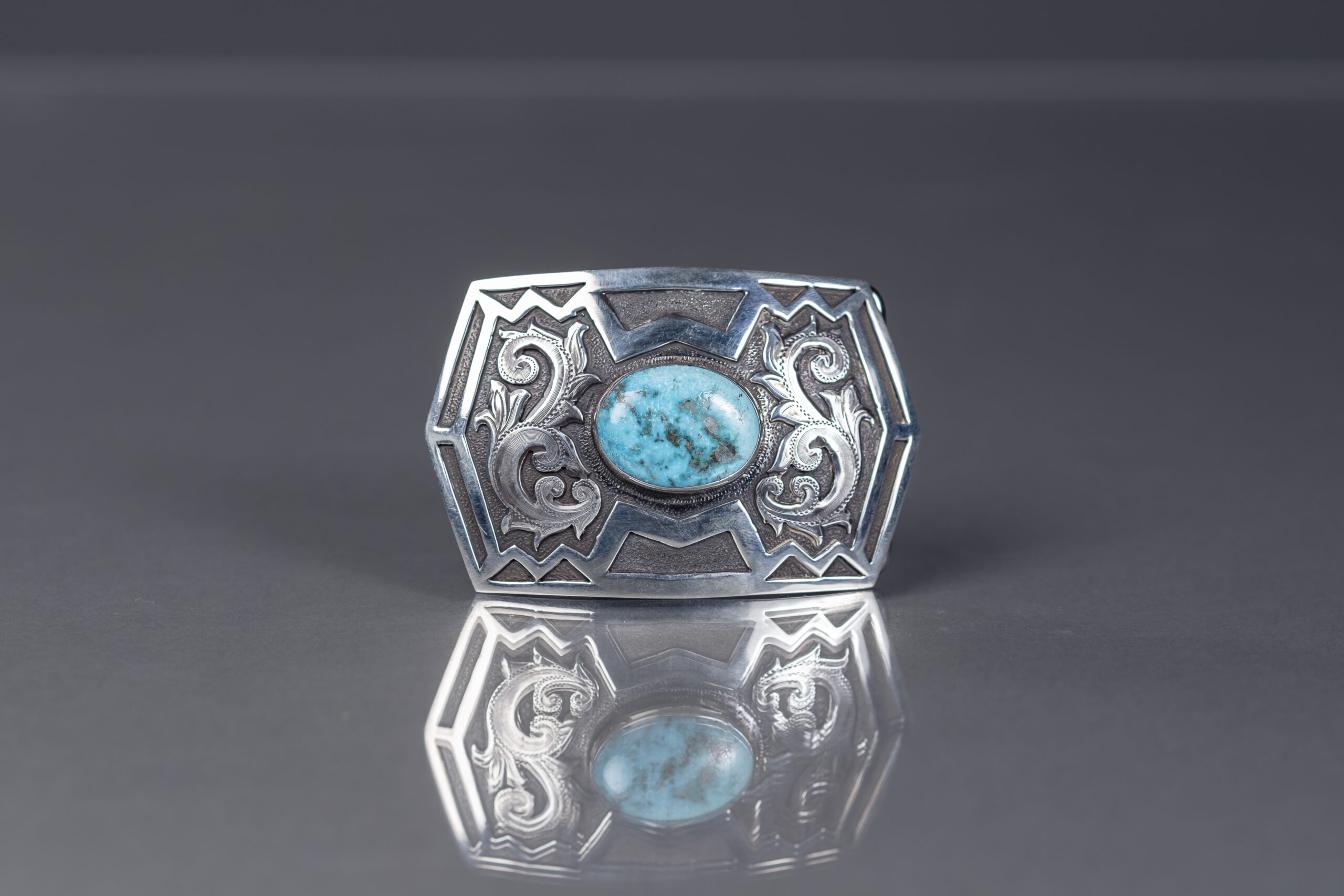
Beyond the metal, we often incorporate natural elements. Many custom orders call for stone settings. We use genuine stones such as turquoise, onyx, and mother-of-pearl to add color and character. These inlays are cut to fit specific bezels, adding another layer of complexity to the build. To learn more about the specific properties of these materials, visit our Knowledge Hub. This Knowledge Hub was built to answer the most common questions about material durability and care.
This is the heart of the workshop. The transition from a flat sheet of metal to a three-dimensional buckle requires skilled hands and decades of experience.
The process of how belt buckles are made involves building layers. We don't just stamp a flat image; we build depth. Skilled artisans take the metal sheets and hand-cut the figures, letters, and banners using precision saws.
Once these individual pieces are cut, they are soldered onto the base. This is a delicate process. The silversmith must apply enough heat to permanently bond the metals, but not so much that the fine details melt away. As a result, the buckle gains physical texture. You can run your fingers over the surface and feel the raised letters and the edge of the brand.
Perhaps the most defining feature of a Western buckle is the scrollwork. At A Cut Above Buckles, we do not rely on machine stamping for this critical detail. Instead, we rely on the art of hand engraving.
A master engraver uses a tool called a graver to cut into the metal surface. They carve each swirl, leaf, and flower by hand. This creates a "diamond cut" effect that catches the light differently than a molded product ever could. Consequently, no two buckles are exactly alike. The slight variations in the scrollwork are the artist's signature, proving that a human hand guided the tool.
For many designs, we apply an antiquing process. This involves oxidizing the background metal to turn it dark grey or black. Afterward, the buckle is polished. The high points (the letters, figures, and scroll cuts) shine brilliantly, while the background remains dark.
This contrast is essential. It makes the text readable from a distance and highlights the engraving's depth. It gives the buckle a rugged, lived-in look popular in rodeo arenas.
The final stage of how belt buckles are made is inspection and finishing. We put every piece through a multi-stage quality control process. We check the soldering joints for strength. We ensure the stone settings are secure. We verify that the spelling and dates match the original proof exactly.
Finally, we polish the buckle to a mirror finish. Unlike some manufacturers, we typically avoid using clear coats or lacquers on our metals. Lacquer can chip over time, leaving the buckle looking patchy and allowing moisture to trap underneath. By leaving the metal natural, you can easily polish and maintain it for a lifetime, ensuring it always looks its best.
This entire process (from digital proof to final polish) takes time. Typically, a fully custom piece requires about 6 weeks to complete. It is a timeline dictated by quality, not speed. Head over to our Showcase page to view past projects and get an idea of what we're capable of.
When you hold a custom, handcrafted buckle, you are holding weeks of work and centuries of tradition. We build these pieces to be worn, not just displayed. They are designed to withstand the dust of the arena, the sweat of a day’s work, and the passage of time.
Now that you understand how belt buckles are made, we hope you feel the pride that goes into every piece. To stay up-to-date on our latest custom projects and new product releases, follow A Cut Above Buckles on Facebook. Ready to create your own heirloom? Contact us today to begin your project.

© Copyrights 2026 A Cut Above Buckles


