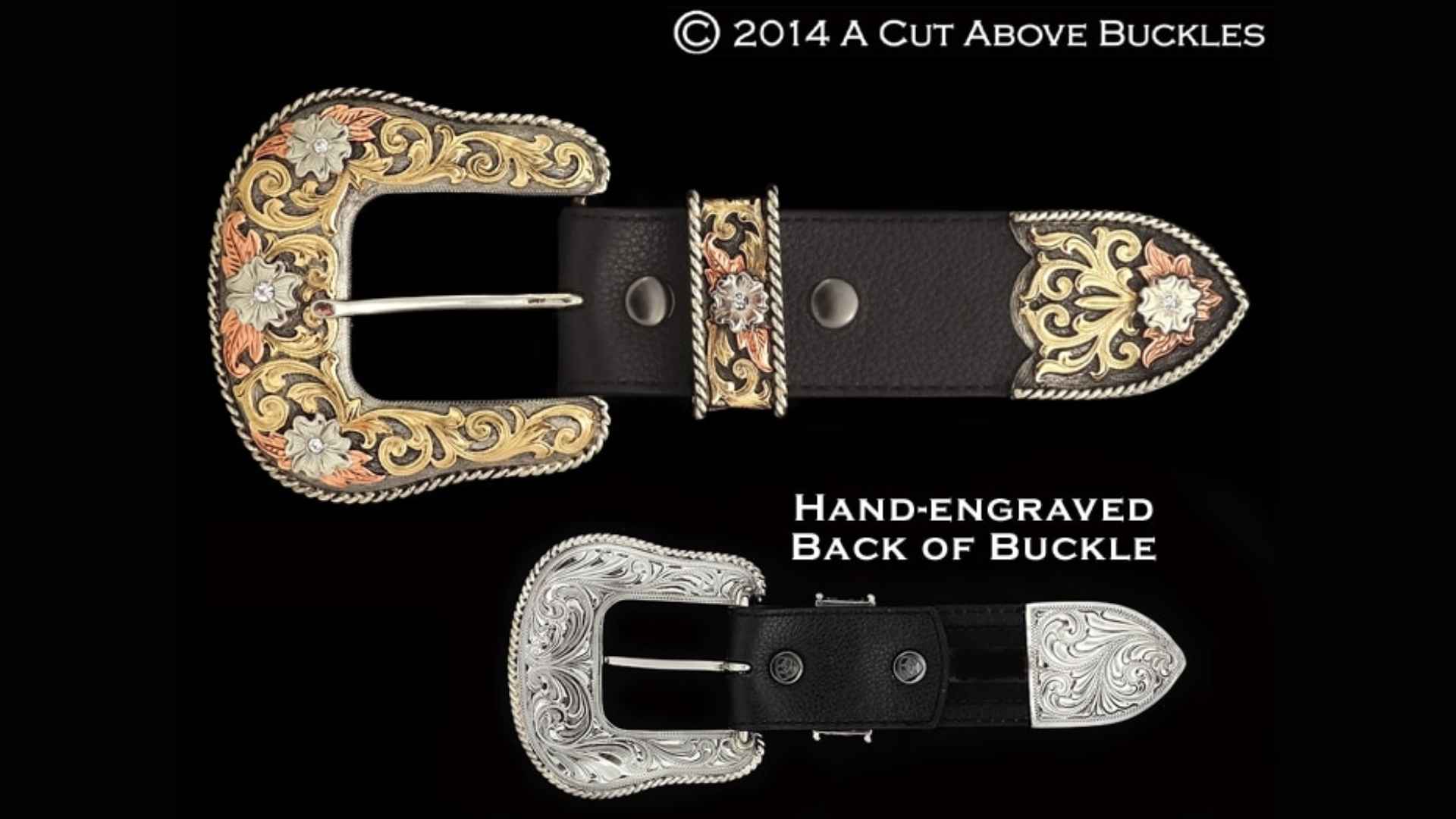
A ranger belt buckle set is not just a buckle. It is a complete system, and each piece in the set has a specific job. If you have ever seen a fully dressed western belt with matching silver hardware from end to end, that is what a ranger set looks like when it all comes together.
For someone encountering this style for the first time, the terminology and the individual parts can be confusing. This guide breaks the whole system down, piece by piece, and explains how the set works, how to wear it correctly, and what to look for when buying one.
The term "ranger style" in western buckle sets traces back to the belt hardware associated with working cowboys, lawmen, and outdoorsmen of the late nineteenth and early twentieth centuries. These men needed gear that held up under hard use, looked sharp for town days, and could be maintained and repaired with basic tools in the field.
Their belts were often dressed with matched sets of silver hardware. A main buckle at the front, a keeper loop to hold the tail of the belt in place, and a tip at the end to protect the leather and finish the look. Over time, silversmiths refined this system into the matched set format that western wearers still use today.
The design language that came from that era, clean scroll engraving, rope borders, antiqued silver, bold proportions, became the foundation of what buyers now call ranger style. The look is traditional, authoritative, and distinctly western.
A standard ranger belt buckle set contains three matched pieces. Each piece is sized and designed to work with the others, and quality sets carry consistent engraving and finish across all three.
The main buckle is the large piece at the front center of the belt. It does the functional work of fastening the belt, but in a ranger set it also carries the design focus. Most ranger-style main buckles run rectangular in shape, often with a slightly wider face than standard western buckles, which gives the engraving more room to develop.
The main buckle connects to the belt through a strap bar on the back, sized for the belt width the set is designed for. Most ranger sets are built for a 1.5-inch belt strap, though wider versions exist for broader belts.
The keeper is the smaller middle piece, sometimes called a center piece or slide. It sits on the belt strap between the main buckle and the belt tip, usually positioned a few inches from the main buckle. Its functional job is to hold the loose tail end of the belt flat against the strap after fastening, preventing it from flopping or shifting.
In a well-made ranger set, the keeper carries the same engraving pattern as the main buckle, scaled down to fit the smaller piece. This matching detail is what makes a ranger set look intentional and unified rather than assembled from mismatched parts.
Keepers in ranger sets typically feature two side bars that the belt slides through, holding the piece in place at a fixed position. Some versions have a single bar on the back and attach at a specific spot on the belt.
The tip, also called a belt end tip or tongue tip, caps the pointed end of the belt strap. It is the smallest piece in the set and covers the last inch or two of the leather. Its practical purpose is to protect the end of the belt from fraying, peeling, or splitting with wear.
Like the keeper, a quality tip carries the same engraving pattern as the main buckle, completing the visual continuity of the set from one end of the belt to the other. Tips either crimp onto the leather end or slide on and get secured with small screws or rivets from behind.
Understanding how each of these components connects to the belt is covered in more detail on the belt buckle parts, types, and closures page.
Some ranger sets add a fourth piece, a second keeper worn on the other side of the main buckle. This gives the belt more visual weight across the full length and is common in trophy sets, show sets, and premium western outfits. Four-piece sets are less common than three-piece sets but appear regularly in rodeo, horse show, and high-end western dress contexts.
Variations on the standard three-piece system include sets with scalloped edges, sets using two-tone or three-tone metal combinations, and sets with stone work incorporated into all three pieces consistently.
The set and the belt have to match in width. A ranger set built for a 1.5-inch belt strap will not sit correctly on a 1.75-inch belt. The keeper bars will be too narrow, and the main buckle bar will not accept the wider leather.
Confirm the belt strap width before ordering any ranger set. The most common widths for men's ranger sets are:
1.5 inches, the standard for most adult western dress belts
1.75 inches, used with wider belts and larger statement sets
1.25 inches, found in some women's western sets and slimmer dress styles
Women's ranger sets typically run smaller overall, with a more refined main buckle and scaled-down keeper and tip proportions. The same three-piece structure applies, but the dimensions suit a narrower belt and frame.
The belt buckle size guide helps confirm correct sizing across belt width and overall buckle dimensions before any purchase.
Ranger sets come in several metal options, and the material affects both the appearance and the long-term wear of the set.
The most common materials in ranger belt buckle sets are:
German silver, the standard material in mid-range ranger sets. It is a copper, nickel, and zinc alloy with a cool silver-tone appearance. It does not tarnish as readily as sterling and handles daily wear well.
Sterling silver, the premium option. A sterling ranger set has more visual warmth, takes engraving with greater depth and clarity, and develops a natural patina over time. These sets cost more but hold up across decades with proper care.
Two-tone and three-tone sets, which combine silver-tone metal with gold, copper, or brass accents. The contrasting tones highlight the engraving detail and border work, giving the set more visual depth than a single-tone piece.
Cheap ranger sets often use zinc alloy with plated finishes. The plating wears through at contact points within months of regular use, leaving raw base metal visible at the edges and strap bar. A quality set in German or sterling silver will outlast any plated piece by years.
The engraving across a ranger set tells most of the story about the quality of the piece. A well-matched set carries consistent line weight, depth, and pattern from the main buckle through the keeper to the tip. The design does not change between pieces. It scales.
Common engraving styles in ranger belt buckle sets include:
Scroll and vine, the most traditional pattern in western silverwork. Flowing curved lines fill the buckle face and border areas, with tighter versions of the same pattern on the keeper and tip.
Floral, which uses rose, lily, or vine motifs and pairs well with rope borders on the frame edge.
Rope border only, a cleaner look with the engraving detail concentrated at the frame edge and the buckle face left mostly plain or frosted.
Basketweave stamped background, a textured surface treatment that adds depth without complex hand engraving.
The consistency of the engraving across all three pieces is one of the clearest indicators of set quality. If the keeper looks like it came from a different mold than the main buckle, the set was not designed and produced as a unified piece.
Wearing a ranger set correctly is straightforward once you understand the purpose of each piece.
The main buckle goes at the front center of the belt, positioned at the navel or just below it as with any western buckle. Thread the belt through the jeans loops, insert the tongue through the buckle, and fasten at the appropriate hole.
The keeper slides onto the belt strap and sits a few inches to the right of the main buckle, typically between the first and second belt loop. After fastening, tuck the loose tail of the belt through the keeper. The tail should lay flat against the main strap with the tip visible at the end.
The tip simply caps the pointed end of the belt. No adjustment needed. It stays at the end of the leather and shows when the belt is threaded through the keeper.
A dressed ranger belt, buckle at center, keeper holding the tail flat, and tip finishing the end, is a complete look from any angle. The matching hardware across all three pieces reads as intentional and put-together in a way a single buckle on a plain belt simply cannot.
Before buying a ranger belt buckle set, a few checks prevent the most common compatibility issues.
Check these points before placing an order:
Confirm the belt strap width and match it to the set's bar width
Confirm the keeper bar width accepts the same strap width as the main buckle
Check that the tip size fits the belt end dimension
Confirm the engraving pattern matches across all three pieces, not just the main buckle
Check the metal type and finish to confirm it suits the intended use
The buyers guide to custom belt buckles covers the full range of purchasing considerations in one place and is a useful reference for anyone ordering western buckle hardware for the first time.
A custom ranger belt buckle set follows the same three-piece structure but gets built around a specific design. Ranch brands, initials, event details, organization logos, and personal imagery can all be incorporated consistently across the buckle, keeper, and tip. The engraving pattern develops from the design rather than being pulled from a catalog.
Custom sets work particularly well for awards, organizational recognition, and occasions where the finished piece needs to carry specific meaning. A set awarded to the top performer in an organization or a rodeo winner carries different weight when the design is built around that specific achievement.
To explore design options and start a custom ranger set, visit the custom designs page or reach out to A Cut Above Buckles directly with your project details.

© Copyrights 2026 A Cut Above Buckles


