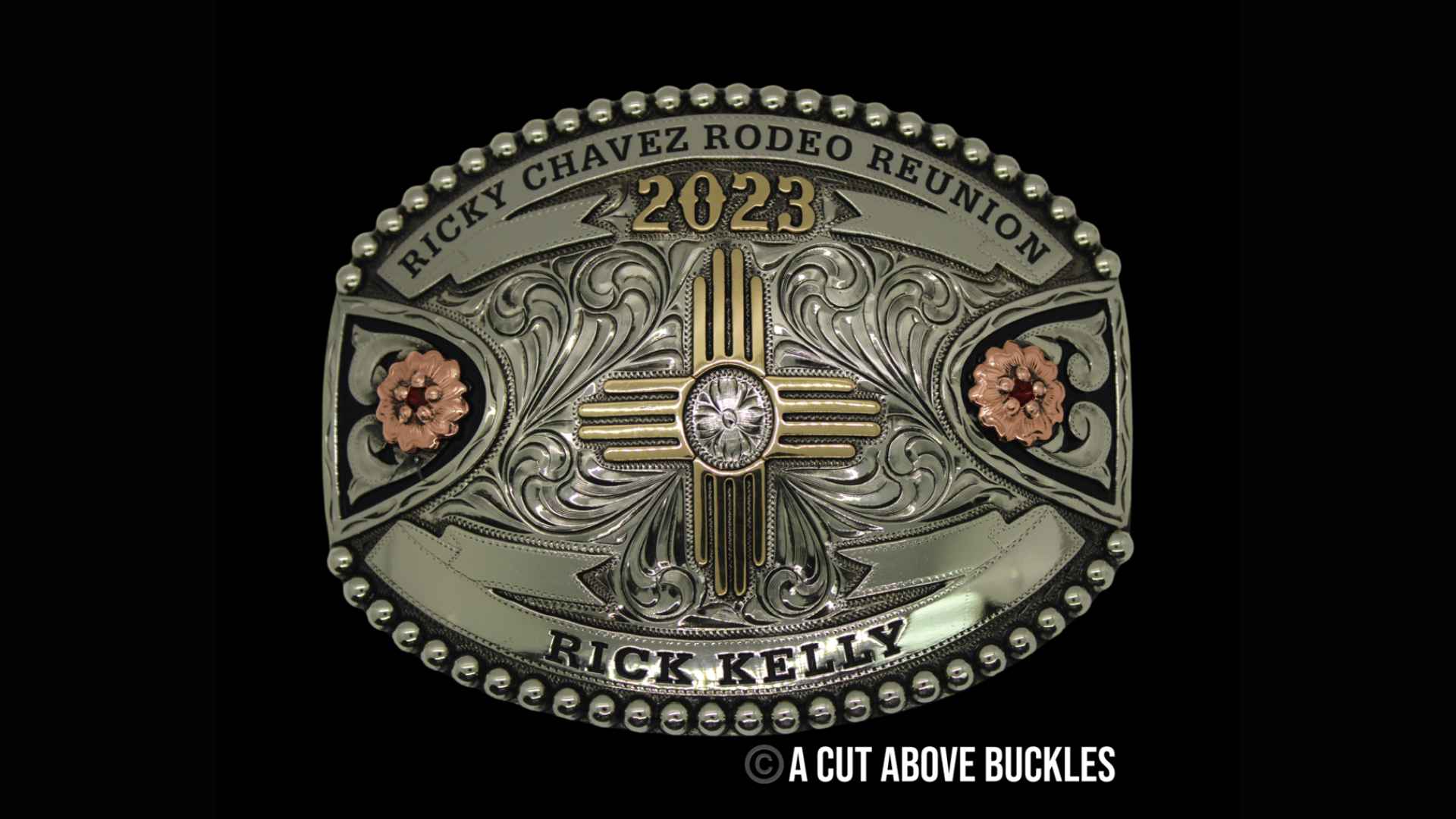
"Made in USA" gets stamped on a lot of products that barely touch American soil before reaching a shelf. Belt buckles are no exception. A piece might get its final polish domestically while every other step happened overseas, and the label alone will not tell you that. This guide covers what buyers should actually look for when searching for a genuine American made western belt buckle, and what questions separate a real answer from a marketing line.
The phrase itself has no single fixed meaning across every industry. Federal Trade Commission guidelines require that a product labeled "Made in USA" be "all or virtually all" made domestically, but enforcement varies, and plenty of sellers use looser language like "designed in the USA" or "assembled in the USA" that implies more than it delivers.
For belt buckles specifically, the production chain has several distinct stages: design, metal sourcing, cutting and shaping, engraving, stone setting, and finishing. A product can pass through some of these stages domestically and others overseas, and still end up marketed as an American piece. Knowing the stages helps a buyer ask sharper questions.
Understanding the full production process makes it much easier to spot where a maker's claims hold up and where they might be stretched.
Design work covers the initial concept, the layout, and the proof a customer approves before production starts. This step can happen entirely on a computer or a drafting table anywhere in the world, so "designed in America" by itself says very little about where the physical piece gets made.
The raw metal, whether sterling silver, German silver, or brass, comes from a supplier, and that supplier's location is a separate question from where the buckle itself gets built. Many domestic makers still source raw silver from global markets, since silver is a globally traded commodity. What matters more for a "made in USA" claim is where that raw metal gets shaped into a finished piece.
This is where flat metal stock becomes a buckle blank, cut and shaped into the base form of the piece. Skilled metalworking at this stage requires specific tooling and trained hands, and it is one of the harder steps to outsource without sacrificing quality control.
Hand engraving is arguably the most labor-intensive part of the process and the step most associated with true craftsmanship. A silversmith trained in scroll work, floral patterns, or western motifs spends real time on each piece. This step is difficult to fake with a "Made in USA" label, since machine-stamped imitation engraving looks noticeably different from hand-cut work under close inspection.
Assembly covers stone setting, soldering multiple metal layers together, and attaching hardware like the strap bar. Finishing includes polishing, antiquing, and any protective coating. These final steps are sometimes the only domestic portion of a supply chain that otherwise runs overseas, which is exactly why a vague "finished in the USA" claim deserves a follow-up question.
The how belt buckles are made guide covers this full production sequence in more depth and helps buyers understand what each stage actually involves.
A buckle built by a skilled American silversmith carries advantages that go beyond a label. Domestic craftsmen trained in traditional western silverwork bring years of hands-on experience to engraving depth, metal weight, and design proportion. That experience shows in details a casual buyer might not consciously notice but will feel the difference of when handling the piece.
Domestic production also allows tighter quality control at every stage. When cutting, engraving, and finishing all happen under one roof or within a closely managed supply chain, a maker can catch problems early rather than receiving a finished batch from overseas with no chance to correct flaws before they reach the customer.
Communication is another practical advantage. A domestic maker working directly with customers can walk through design changes in real time, answer specific questions about materials, and make adjustments mid-process. That kind of responsiveness is much harder to get from an overseas supply chain with language barriers and long shipping cycles built into every revision.
A maker's ability to handle full custom work, not just personalization on a pre-made template, is one of the clearest signals of genuine domestic craftsmanship. True custom capability means a customer can request a specific design from scratch: a particular engraving style, a ranch brand worked into the border, a specific stone placement, or a unique shape that does not exist in a standard catalog.
Mass-produced overseas buckles typically offer only surface-level personalization, such as adding a name or initials to an existing template. A domestic silversmith capable of full custom design work can build something that did not exist before the customer's specific request came in.
The buyers guide to custom belt buckles covers what a genuine custom process looks like from first conversation to finished piece, which is a useful reference when evaluating whether a maker's custom claims hold up.
A domestic maker with real production capability can usually repair their own work. A loose stone, a bent tongue, a worn snap, or a piece that needs re-engraving after decades of wear are all things a skilled silversmith working with proper tools can address directly.
This matters more than it might seem at first. A maker who can repair what they build has full knowledge of how the piece was constructed, what materials were used, and how to fix a problem without compromising the original design. A seller who only imports finished pieces typically has no repair capability at all, since they never built the piece in the first place.
Asking a maker directly whether they offer repair service, and how that repair process works, is one of the more revealing questions a buyer can ask.
Buyers evaluating a belt buckle maker's American-made claims should ask specific, direct questions rather than accepting general marketing language.
Useful questions include where the metal shaping and engraving actually take place, whether the maker can describe or show their production process in detail, whether they offer repair service for pieces they have made, how they handle custom design requests from initial concept through final proof, and what materials they use and where those materials come from.
A maker with a genuinely domestic process will usually answer these questions specifically and without hesitation. Vague answers, or answers that shift the subject back to marketing language rather than production detail, are worth treating with some skepticism.
A Cut Above Buckles operates as a custom western belt buckle company built around direct, hands-on involvement in the design and production process. Every custom piece goes through a proof stage with the customer before production begins, and the team works directly with buyers from first concept through finished buckle.
Rather than making broad claims about every stage of every piece, the most useful thing a buyer can do is ask specific questions about any particular order, including material sourcing, engraving process, and repair capability for that specific piece. A maker willing to have that direct conversation is generally a stronger signal of real craftsmanship than any label on a product page.
A belt buckle is not a disposable purchase. A well-made piece is meant to last for years, sometimes decades, and often carries specific personal meaning tied to an achievement, a family, or a milestone. Knowing where and how that piece was actually made affects both the quality you can expect and your ability to get it repaired down the road.
Rather than relying on a label alone, ask the questions that reveal the real production story. A maker willing to answer clearly, and to show the custom design process in detail, is telling you more than any packaging claim ever could.
Anyone considering a custom belt buckle order can start that conversation directly. The custom designs page shows a range of styles and finishes, and reaching out with specific questions about the production process is always a reasonable first step before placing an order.
To ask about materials, process, or custom capability for a specific project, visit A Cut Above Buckles and reach out directly with your questions.

© Copyrights 2026 A Cut Above Buckles


