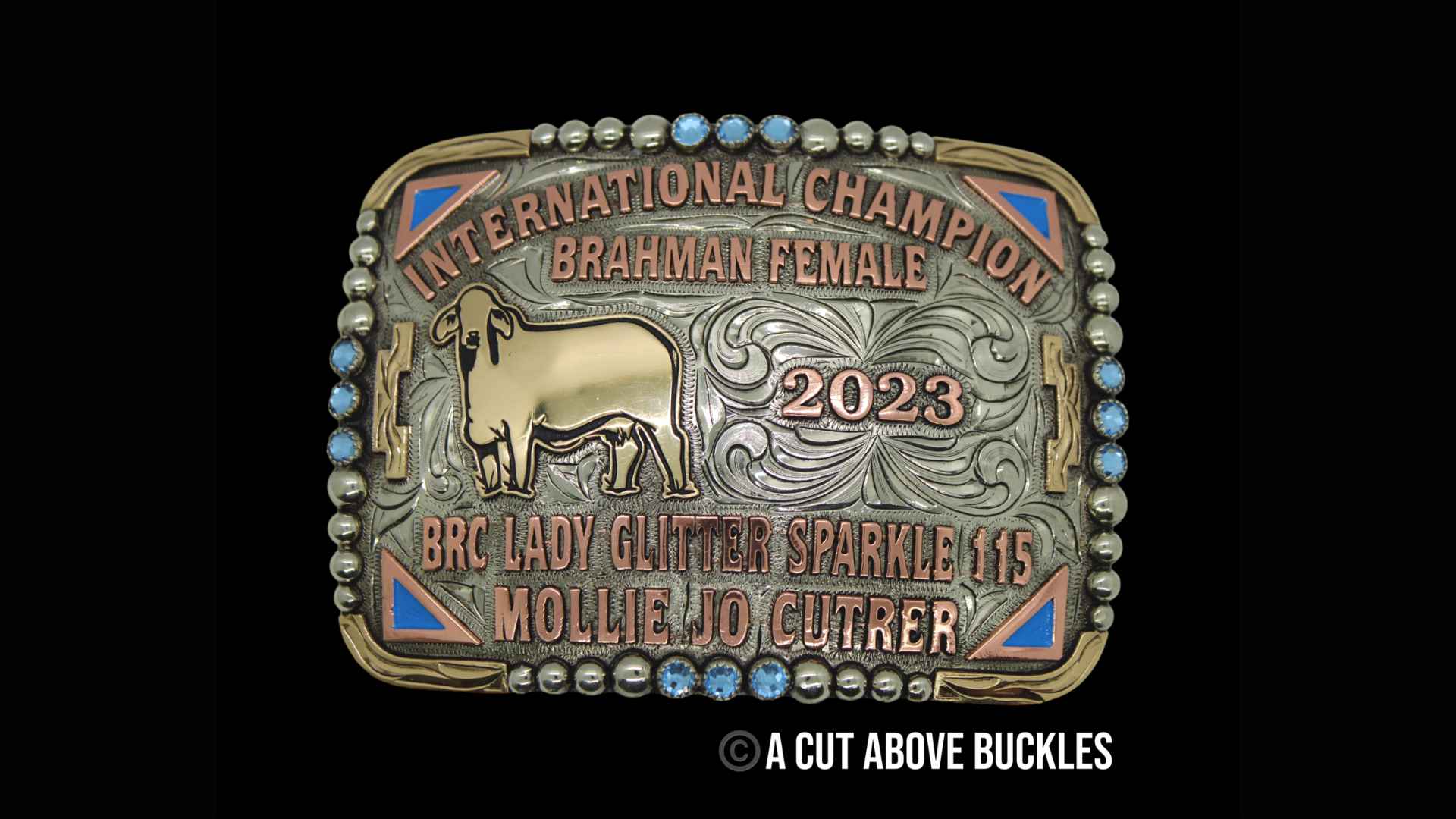
Some belt buckles cross over from personal accessory into genuine cultural icon. A handful of designs and traditions have become so recognizable that they represent entire eras of rodeo, ranching, and American western identity on their own. This guide looks at what made certain buckle traditions famous, the design characteristics behind them, and why they still matter to collectors and western culture today.
Few symbols in western sport carry as much weight as the gold buckle awarded at the National Finals Rodeo. Presented to world champions across rodeo's major events, the NFR gold buckle has become shorthand for the pinnacle of professional rodeo achievement. Winning one places a competitor in a small, well-documented group of champions whose names get tied permanently to that year's title.
The design tradition behind these championship pieces relies on a few consistent traits:
Bold proportions, larger and heavier than a standard competition award
Deep, detailed engraving covering the full face of the buckle rather than a small central area
Gold tone finishes, visually separating championship pieces from silver-toned regional awards
Consistent branding across years, so a champion buckle from one decade is still recognizable as part of the same tradition today
That visual distinction is deliberate. A world champion buckle needs to be instantly recognizable as the top tier of achievement, distinct from the buckles awarded at smaller regional events throughout a competitor's career.
Rodeo belts and buckles covers how the broader trophy buckle tradition developed across professional and amateur rodeo circuits, which the championship-level pieces sit at the top of.
Western films and television did as much as actual ranching culture to fix the belt buckle in the American imagination. Studio costume departments outfitted cowboy actors with oversized, heavily detailed buckles designed to read clearly on camera, often larger and more ornate than what a working cowboy would have actually worn day to day.
This on-screen exaggeration shaped public expectation of what a western buckle should look like. Audiences saw bold, silver-heavy pieces on screen for decades, and that visual standard influenced real-world buckle design and buyer preference well beyond the film industry itself.
Western wear brands and silversmiths took cues from screen costuming, feeding back into a style that blended authentic ranching hardware with the more theatrical presentation Hollywood had popularized. This back-and-forth between authentic working gear and stylized screen costuming is part of why western buckle design today spans such a wide range, from understated ranch-brand pieces to large, elaborately engraved statement buckles.
Custom belt buckles have occasionally entered the historical record as diplomatic or political gifts. American presidents and political figures have received custom western buckles as gifts from ranching associations, rodeo organizations, and western state delegations over the decades, a tradition tied to the buckle's status as a distinctly American symbol of regional identity and hospitality.
These pieces typically carry a few recurring elements:
State seals or emblems, representing the region presenting the gift
Presidential or organizational imagery, tied to the specific occasion
Sterling silver construction, reflecting the formality of the gift
Detailed hand engraving, since these pieces are usually built to a higher standard than everyday western hardware
While specific pieces vary and are not always well documented publicly, the general tradition of gifting custom western silverwork to visiting dignitaries and political figures has continued for generations as a way of representing western regional pride at a national level.
Beyond the top-tier gold buckle tradition, specific rodeo disciplines have developed their own recognizable buckle styles over time.
Barrel racing buckles often incorporate a horse in mid-turn or a cloverleaf pattern referencing the event's course layout, a visual shorthand that barrel racing fans recognize instantly.
Team roping buckles frequently distinguish between header and heeler positions through banner text or paired imagery, a design tradition that reflects the partnership nature of the event itself.
These discipline-specific traditions did not emerge from a single famous piece the way the NFR gold buckle did. Instead, they developed gradually as silversmiths working across decades of rodeo competition refined a visual language specific to each event, one that competitors and fans came to associate with that discipline specifically.
Some of the most historically significant western buckles are not championship pieces at all, but well-preserved vintage and antique examples from working silversmiths whose reputations grew over time. A buckle stamped with a respected maker's mark from the early to mid-twentieth century can carry serious collector value today, not because of a single famous wearer, but because of the craftsmanship reputation built by that maker across an entire career.
Antique western belt buckles covers how collectors evaluate these pieces, including maker marks, metal type, and condition. The value of vintage and antique western belt buckles goes further into what specifically drives a piece's worth in today's collector market.
What separates these pieces from mass-produced vintage buckles is the same thing that separates any quality handcrafted piece from an imitation: visible hand engraving depth, deliberate design choices, and construction that has held up structurally across decades of wear.
Custom belt buckles marking military service, unit affiliation, or specific historical campaigns have carried significant personal and sometimes broader cultural weight, particularly among veteran communities. While these pieces are rarely famous in the sense of broad public recognition, they hold deep significance within the communities that produced and wore them.
Regimental and unit-specific buckles, often produced for reunions or significant anniversaries, sometimes become sought-after collector pieces decades later, valued both for their craftsmanship and their connection to a specific unit's documented history.
Looking across these different traditions, a few common threads explain why certain buckle styles and pieces achieve lasting recognition rather than fading into the broader category of western accessories.
Clear symbolism that reads instantly. A gold champion buckle, a barrel racing cloverleaf, or a state seal all communicate their meaning without requiring explanation, which is part of why they stick in collective memory.
Consistency across a tradition. The NFR gold buckle did not become iconic through a single year's design. It became iconic because the tradition continued, year after year, building a visual language that rodeo fans came to recognize immediately regardless of which specific champion wore it.
Genuine craftsmanship. Mass-produced pieces rarely become the subject of collector interest or cultural memory, because they lack the individual character that hand engraving, thoughtful proportion, and quality metal construction bring to a piece. The buckles that last in public memory tend to be the ones built with enough skill to actually last physically across decades.
Western belt buckles and tradition reimagined covers how these historical design traditions continue influencing modern western silverwork, connecting today's custom pieces to the same lineage that produced the iconic designs discussed here.
The common thread across every famous or historically significant western buckle is that the piece meant something specific to the person or organization behind it. A championship title, a state identity, a military unit, a specific rodeo discipline. The recognition came after the meaning, not before it.
That principle applies just as directly to a custom buckle built today. A piece designed around genuine personal or organizational significance, built with real craftsmanship, carries the same foundation that has made certain western buckles memorable for generations.
To explore custom design options built on that same tradition of meaningful western craftsmanship, visit A Cut Above Buckles and start a conversation about your own piece.

© Copyrights 2026 A Cut Above Buckles


