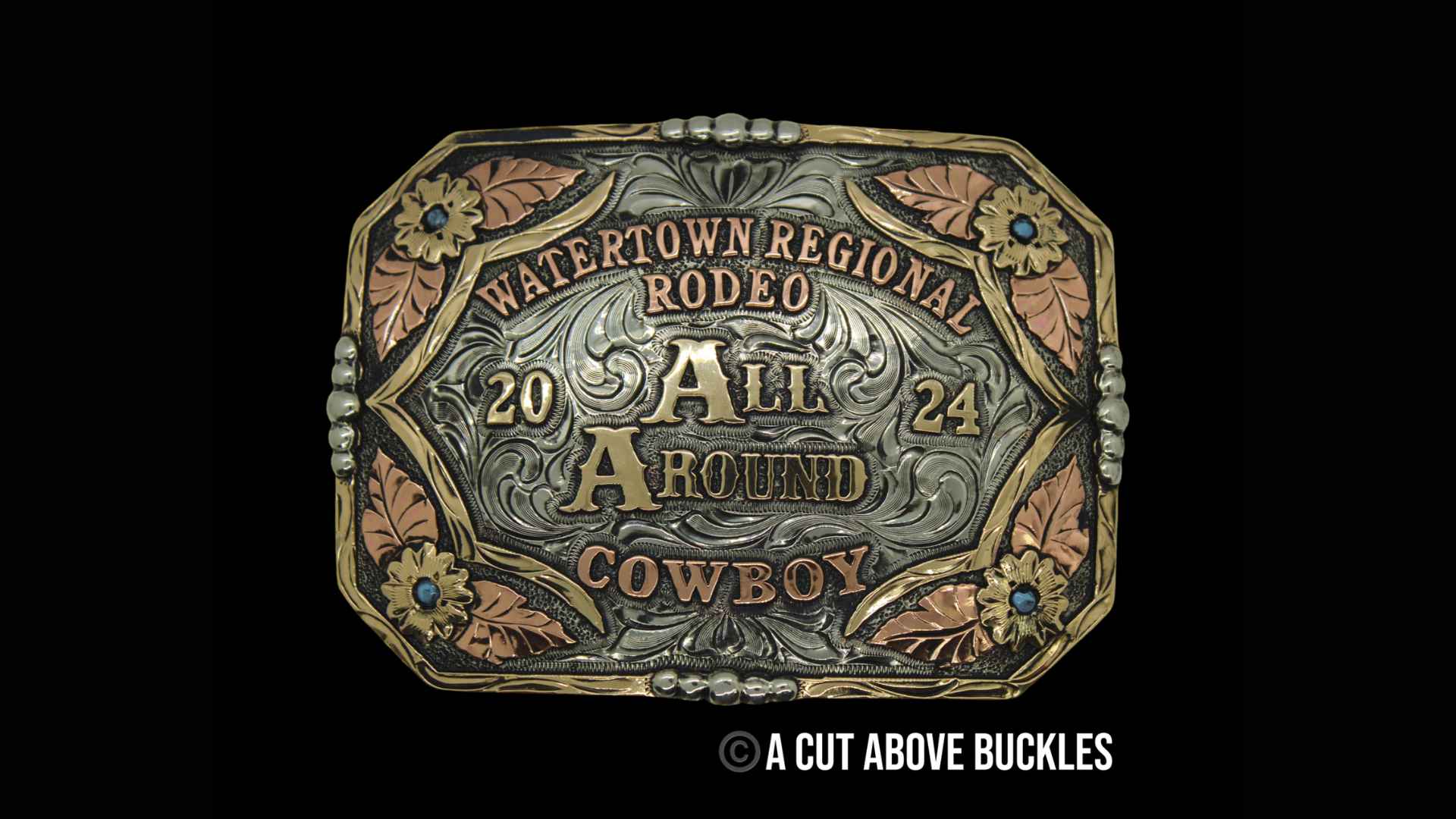
Pick up an old western belt buckle and you are holding more than metal. You are holding a record. Depending on the piece, that record might speak to a rodeo win, a family name carried across generations, a military service tour, or a ranch built from nothing. Western belt buckles carry meaning that most accessories simply do not.
That meaning did not happen by accident. It built up over more than a century of American western life, one buckle at a time.
Belt buckles started as a practical solution to a practical problem. Early working cowboys needed something reliable to hold a heavy belt in place through long days of riding, roping, and ranch work. The buckle was a tool, nothing more.
That changed gradually as western culture developed its own identity. Rodeo competitions brought competitive achievement into the picture. Ranch families started incorporating their brands into the pieces. Military service members used personalized hardware to mark their time and unit. Over time, the buckle became a canvas for identity.
By the mid-twentieth century, the western belt buckle had become its own symbol within American culture. It represented hard work, skill, pride, and belonging to a specific way of life. That symbolism still holds today, and in many communities it runs deeper than ever.
Few symbols in western culture carry as much weight as a rodeo trophy buckle. Winning one means something specific. It means you competed, performed under pressure, and came out on top in a field of serious competitors.
Trophy buckles entered rodeo culture as a natural extension of the sport's values. Rodeo celebrates skill developed through years of practice and physical discipline. A belt buckle, worn on the body rather than displayed on a shelf, reflects that active lifestyle better than any static award could.
When a bull rider or barrel racer wears a competition buckle at the next event, the whole arena understands what it represents. No explanation needed. That shared understanding is part of what makes trophy buckles so culturally embedded in rodeo communities.
The tradition extends beyond professional rodeo into amateur circuits, youth competitions, and local events. An FFA member winning a livestock show buckle experiences the same sense of earned recognition. The scale differs. The meaning does not.
A ranch brand is one of the oldest forms of family identity in the American West. Families registered brands to mark their livestock, their land, and their name. Many of those same brands have stayed in families for generations without changing.
Putting a ranch brand on a belt buckle takes that identity off the fence post and onto the person. It says something clear about where you come from, what your family built, and what you carry forward. For ranching families, a buckle bearing the family brand is not a fashion choice. It is a statement of belonging.
This is why ranch brand belt buckles hold such strong meaning for the people who wear them. A grandfather's brand on a handcrafted buckle connects the current generation to everything that came before. That connection does not fade. If anything, it deepens with time.
Some families order matching sets so every member carries the same mark. Others commission a single heirloom piece meant to pass from one generation to the next. Either way, the ranch brand on silver becomes a permanent record of family history.
Western belt buckles have a long connection to military culture, particularly in regions where western and military traditions overlap. Service members and veterans have used custom buckles to mark unit affiliations, deployment tours, branch insignia, and years of service.
A military buckle carries a different kind of weight than a rodeo piece. It does not mark a competition win. It marks sacrifice, commitment, and time spent serving something larger than individual achievement. For many veterans, wearing a buckle connected to their service keeps that chapter of their life present and visible.
Units sometimes commission custom buckles for reunions, retirements, or milestone anniversaries. These pieces often feature branch emblems, unit crests, or deployment details that only members of that unit would fully recognize. That specificity is part of what makes them meaningful.
Not every meaningful buckle comes from a competition or a family ranch. Personal milestones carry their own weight. Graduations, retirements, anniversaries, and significant life transitions are all moments worth marking with something lasting.
A custom buckle made for a specific milestone becomes a wearable record of that moment. Unlike a card or a dinner, it stays with the person. Years later, it still connects them to the occasion.
Commemorative buckles also serve a specific and deeply personal role in western culture. When someone passes away, a memorial buckle gives family members a way to keep that person's memory close in daily life. These pieces often feature names, dates, ranch brands, or imagery tied directly to the person being honored.
Our page on memorial belt buckles covers how families approach this kind of design and what details tend to carry the most meaning.
Some buckles do not fit neatly into any of the categories above. They are expressions of personal identity, full stop. A person might commission a buckle simply because it reflects who they are, what they value, or how they see themselves within western culture.
This is equally valid. Western belt buckles have always been personal objects. The design choices, the metal, the size, the imagery all say something about the person wearing it. Someone who chooses a large, ornate piece with bold scrollwork is making a different statement than someone who wears a clean, minimal silver buckle with a single engraved initial.
Neither is more authentic than the other. Both reflect a real relationship between the wearer and what the buckle represents. That range of personal expression is part of why custom western buckles remain relevant across generations and across very different corners of western culture.
A buckle's meaning depends partly on how it was made. A mass-produced piece might carry the right imagery, but it does not carry the same weight as something built by hand from quality materials.
Hand engraving, sterling silver, precise metalwork, and a design process that involves the customer at every stage all contribute to the final piece feeling like it was made specifically for the person receiving it. That feeling matters. An award, an heirloom, or a memorial piece should feel like it was made with care, not pulled from a catalog.
At A Cut Above Buckles, every piece goes through a custom design process. That means working directly with customers to understand what the buckle needs to say and who it is for. The result is a piece built around specific meaning, not a generic design with a name added at the end.
You can learn more about that approach on our custom western belt buckle company page, which covers the process from first conversation to finished piece.
Western belt buckles have stayed relevant because they keep connecting to real things. Actual wins. Actual families. Actual service. Actual loss. Actual pride. They are not decorative objects pretending to mean something. They carry the meaning because the people wearing them put it there.
That is harder to achieve than it looks, and it is exactly why craftsmanship matters in this space. A poorly made buckle cannot hold that meaning for long. A well-made one can hold it for generations.
For a deeper look at the history, design options, and cultural context behind western buckles, visit our knowledge hub. To explore custom designs and start a piece with real meaning behind it, head to A Cut Above Buckles and reach out to the team directly.

© Copyrights 2026 A Cut Above Buckles


