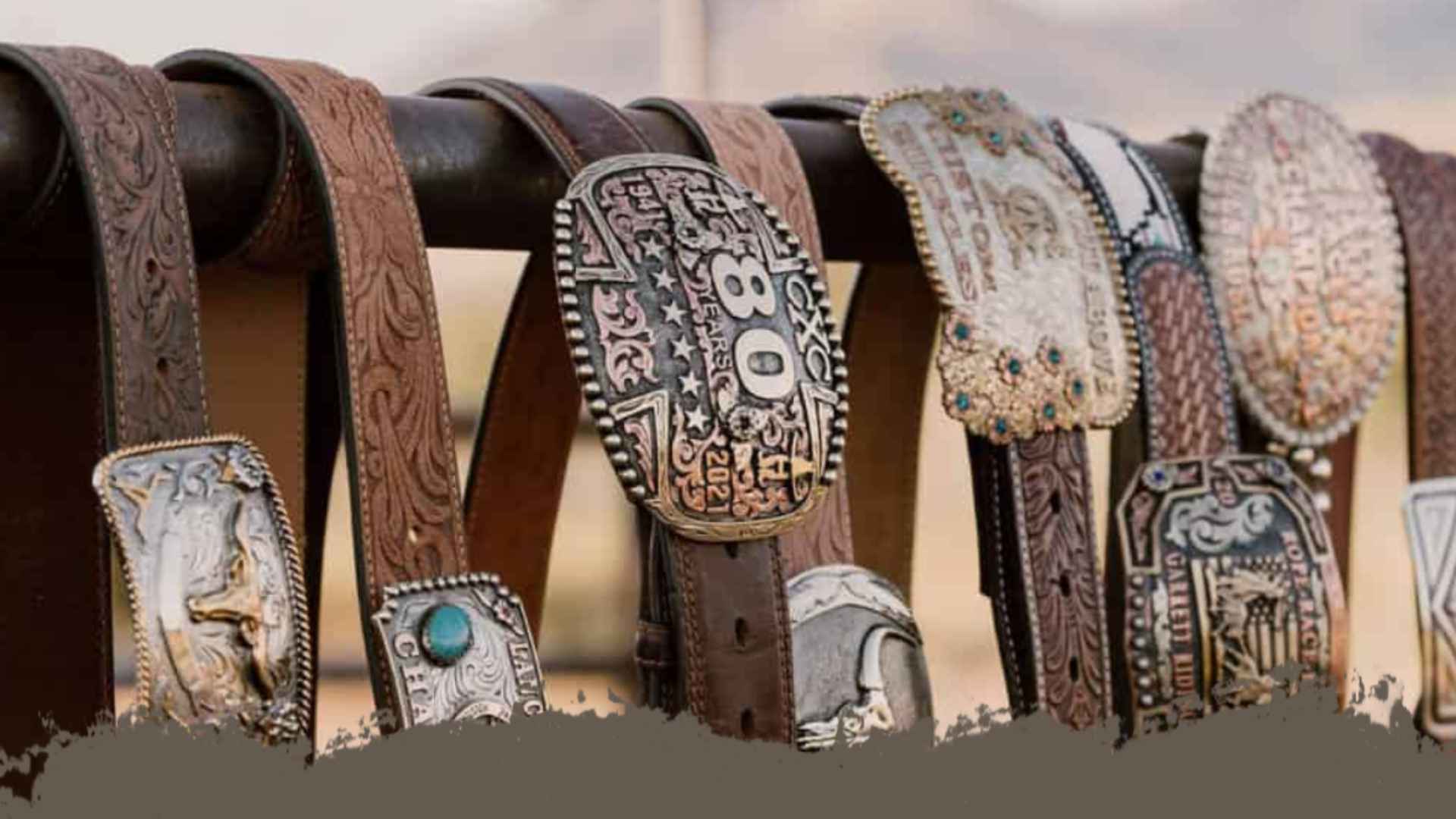
Few images in American history carry as much weight as the Texas Ranger. The lone star, the silver badge, the worn leather, the long miles across open land. That imagery has shaped western culture in ways that go far beyond law enforcement, and the belt buckle sits right in the middle of it.
Texas Ranger belt buckles draw on a deep well of history, symbolism, and craft tradition. This guide covers where that history comes from, what design elements define the style, and how the broader influence of Ranger iconography shows up in western silverwork today.
One important note up front: official Texas Ranger insignia belong to an active law enforcement organization. The buckles discussed here are Texas-inspired western designs that draw on the visual tradition of that heritage. None of them represent official affiliation with the Texas Rangers.
The Texas Rangers were established in 1823, making them one of the oldest law enforcement agencies in the United States. They operated across vast open territory, often working alone or in small groups, and built a reputation for endurance and self-reliance that became central to the mythology of the American West.
Their gear reflected the conditions they worked in. Everything had to be durable, practical, and personal. A Ranger's equipment was not standard-issue in the modern sense. Each man outfitted himself, and personal hardware became part of his identity in the field. The badge came first, but the belt hardware, holster fittings, and buckles that followed told a similar story about the man wearing them.
By the late nineteenth century, Texas silverwork had developed its own distinct character. Craftsmen working in San Antonio and across central Texas built pieces that were heavier, bolder, and more ornamented than what most eastern manufacturers produced. That style fed directly into the visual tradition buyers now associate with Texas Ranger buckles.
Western belt buckles and tradition reimagined covers how that broad heritage continues to influence western buckle design today, across many different styles and regions.
No design element is more central to Texas Ranger buckle imagery than the lone star. The five-pointed star appears on the Texas state flag, on Ranger badges, and on virtually every piece of silverwork that draws on Texas heritage.
The star carries specific meaning in this context. It represents independence, authority, and loyalty to a place and a way of life. In the Ranger tradition specifically, the star badge was a mark of earned trust. You did not receive one. You were appointed to carry it.
In buckle design, the star translates into several different visual treatments.
The most direct use places a large star at the center of the buckle face, often raised above the surrounding surface through overlay or relief work. The surrounding area might carry scroll engraving, rope borders, or a clean antiqued background that lets the star read clearly from a distance.
A well-executed center star buckle needs no other explanation. The design is confident and direct, which is exactly the quality the Ranger tradition projects.
A more subtle approach uses smaller stars along the border of the buckle frame. They might alternate with rope detail, scrollwork, or other western motifs. This treatment still draws on Ranger and Texas imagery but distributes the star motif across the whole piece rather than centering the design on a single point.
Border stars are common in trophy-style buckles for Texas competitions and events, since the design reads as distinctly Texas without being heavy-handed about it.
Some designs incorporate the star as a shaped element within engraved scrollwork or floral patterns. The star form gets traced into the engraving rather than sitting as a separate raised piece. This is harder to execute cleanly and requires a silversmith with strong layout skills, since the star has to read clearly despite being part of a larger pattern.
Silver has been central to Texas western silverwork since the mid-1800s. The early Texas silversmiths who built gear for working cowboys and lawmen used sterling silver for the most significant pieces and German silver for everyday work hardware. That material hierarchy still holds in the custom buckle world today.
A Texas Ranger-style buckle built from sterling silver carries different visual weight than a German silver piece, both literally and in terms of how it reads. Sterling has a warmer, more saturated brightness. It develops a natural patina over time that deepens the contrast in engraved areas and gives the piece a lived-in quality that fits the Ranger aesthetic far better than a permanently bright, high-polish surface.
Antiquing, the intentional application and selective removal of dark patina, is common in Texas-inspired silverwork. The recessed areas of engravings and border detail stay dark while the raised surfaces get polished back to bright. The result is a piece that looks like it has been somewhere, which is exactly the feeling this design tradition aims for.
Beyond the star motif, Texas Ranger-inspired buckles share a set of design elements that place them clearly within the western Texas tradition. Knowing these elements helps buyers identify authentic western silverwork versus pieces that simply label themselves as Texas-style without delivering the visual substance.
The key design elements in this tradition include:
Rope borders, which appear along the outer edge of the buckle frame and reference working cowboy and ranching culture
Heavy scroll engraving, cut deeper and spaced more boldly than the lighter scrollwork common in other western regions
Antiqued or hammered backgrounds, which add visual depth and age character to the piece
Bold proportions, since Texas-style buckles tend to run larger and heavier than equivalent pieces from other western traditions
Banner elements, horizontal or arched text areas that carry names, dates, or event details without competing with the star imagery
Multi-tone metal work, combining sterling silver with gold, copper, or brass accents for visual contrast
These elements do not all appear on every piece. A well-designed Texas-inspired buckle picks from this vocabulary and uses the elements in proportion, so the design reads as unified rather than crowded.
Texas Ranger imagery has been applied to mass-produced buckles so often that the style has become one of the most imitated looks in western accessories. A cast buckle with a star stamped on it can carry the label without carrying any of the actual craft tradition behind the design.
The difference shows in the construction. A genuinely well-made Texas-inspired buckle has hand-cut engraving with visible depth and relief. The star sits as a structurally distinct element, either raised through overlay work or cleanly cut as part of the engraving. The border treatment shows consistent detail work, not a stamped pattern applied after casting.
Weight is another indicator. A quality piece uses more metal. It feels solid in hand without being impractical to wear. A cast piece with thin walls feels light and rings hollow if tapped. A well-built silver piece has density that comes from real material and real construction.
The finishing tells the rest of the story. Antiquing on a quality piece sits consistently in the recessed areas with a clean line between dark and bright. On a mass-produced piece, the antiquing looks uneven, pooled in the corners, or applied without clear intention.
The visual vocabulary of Texas Ranger buckles, stars, rope borders, heavy silver, bold proportions, and antiqued depth, translates directly into custom western buckle work. Buyers who want a piece rooted in that tradition do not need to find a piece labeled as a Ranger buckle. They need to find a silversmith who understands the design language and can build from it.
Custom work in this style starts with the design elements that carry the most meaning for the person ordering the piece. A Texas native might want the lone star prominent and centered. A working cowboy might want the rope border and heavy scroll engraving with his ranch brand worked into the face. A Texas competition winner might want a trophy-style piece with star border detail and a banner for the event name and year.
Custom belt buckle ideas shows how these design elements get incorporated into personalized pieces across different styles and occasions.
Texas Ranger buckle design stays relevant because the values it represents have not changed. Self-reliance, endurance, pride in a specific place and way of life, and the kind of quiet authority that does not need to announce itself. A well-made silver buckle with a lone star and deep engraving communicates all of that without a single word.
That is what good western silverwork has always done. The piece carries the meaning without explaining it. Buyers who want a buckle rooted in that tradition are not looking for a label. They are looking for a piece built with enough craft and intention to hold that meaning for decades.
A Cut Above Buckles builds pieces with exactly that standard. Working with a custom western belt buckle company that understands this design tradition means the finished piece reflects the heritage accurately, not just superficially.
To start a Texas-inspired custom piece or explore how star motifs and western Texas design elements translate into silverwork, reach out directly with your design ideas.

© Copyrights 2026 A Cut Above Buckles


