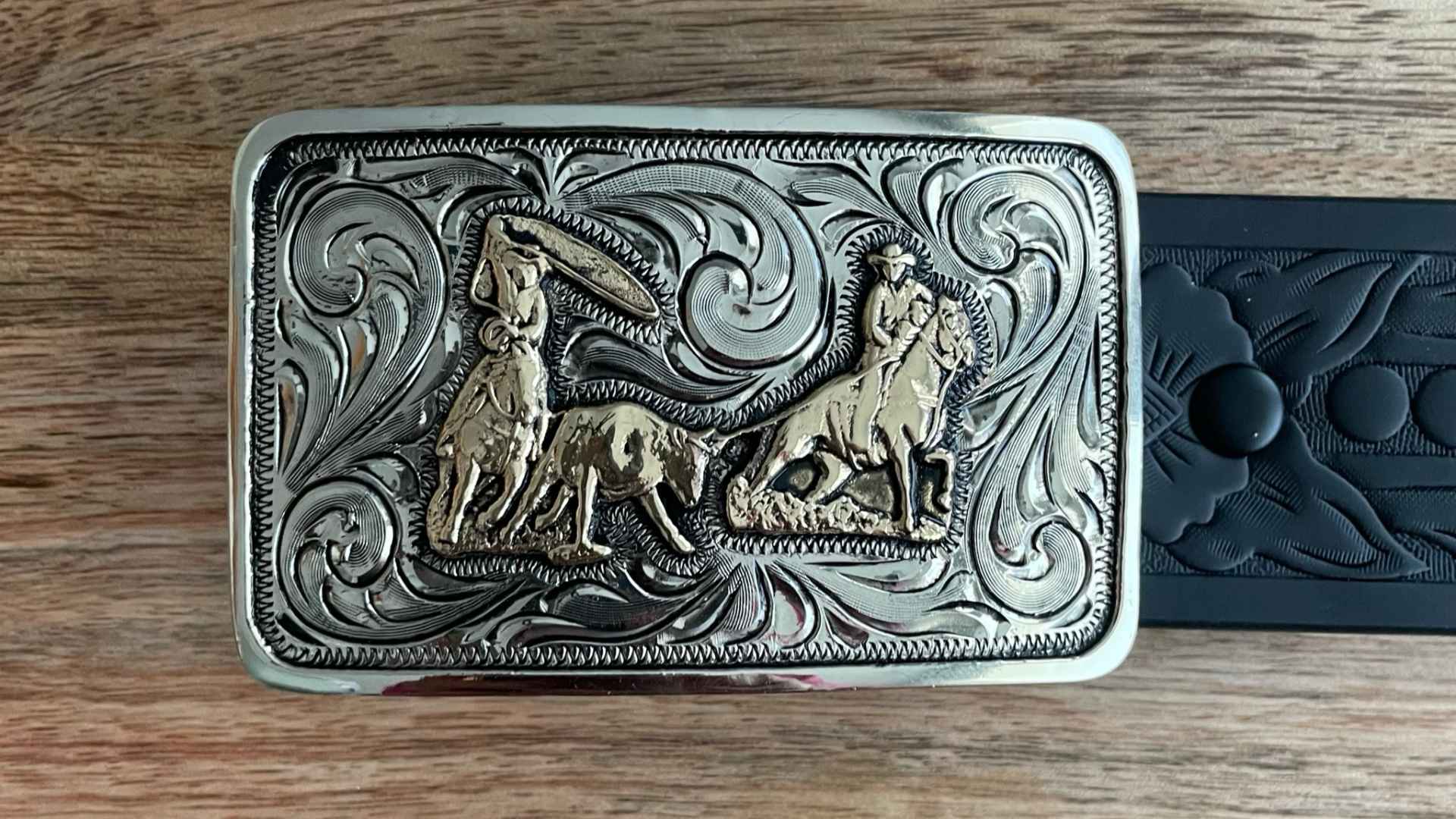
Archery tournaments hand out a lot of medals. Most of them end up in a drawer within a year. A custom belt buckle gives clubs and tournament organizers a way to recognize top performers with something that actually gets worn again, long after the last arrow lands.
This guide covers how archery clubs, leagues, and tournament organizers can build a custom buckle award program, from tournament identity and imagery to division planning and ordering logistics.
Archery has a strong tradition of gear and personal equipment. Archers care about their bows, their arrows, their form, and the specific details that separate a good shot from a great one. A belt buckle fits into that culture as a piece of gear rather than a shelf decoration.
A medal gets photographed at the podium and then stored away. A buckle goes to the next tournament, the next club shoot, and the next practice session. Every time an archer wears it, the recognition stays visible. That ongoing presence is exactly why buckle awards have started appearing more often in archery, following a path already well established in rodeo and shooting sports.
Custom event belt buckles covers the general process organizers follow for building an award program across any competitive sport, which applies directly to archery with sport-specific details layered in.
The tournament name is the most important piece of information on the buckle. To keep the design clean and readable, follow this hierarchy:
Tournament name: Place it in a banner across the top or center of the face — especially useful for longer names or regional designations. It should be the first thing that reads at a glance.
Secondary text: Below the tournament name, include the date, division, and placement result. Keep these details supporting rather than competing with the main title.
Year updates: For annual tournaments, maintain a consistent base design and only update the year. This keeps the award program recognizable over time, and archers who return each year will build a collection of pieces that clearly belong to the same tradition.
Archery-specific imagery gives these buckles an identity separate from generic trophy designs. A few image styles come up often in custom archery pieces.
A drawn bow silhouette, captured at full draw, is the most direct visual reference to the sport and works well as a center design element. Crossed arrows, worked into a border or corner detail, add a classic archery motif without overwhelming the rest of the design. A target face, rendered as a simplified circular design element, ties the piece directly to competitive scoring and works particularly well for accuracy-based awards. A quiver silhouette, used as a smaller accent detail, adds visual interest without competing with the main design focus.
Clubs with an established logo can incorporate that identity directly into the buckle, which strengthens the connection between the award and the organization presenting it.
Custom trophy buckle design walks through how imagery, text, and layout come together on a competition-specific piece, including how to balance illustrated detail against text information.
A well-planned buckle program accounts for the full range of divisions present in archery competitions, ensuring every competitor feels recognized from the start.
Compound and recurve divisions are among the most important categories to recognize, since equipment type significantly changes competition format and scoring. Traditional and barebow categories, where archers compete without sights, also deserve their own placement recognition.
Youth and adult age classes reflect the broad range of competitors participating in most tournaments. Novice and open skill divisions further separate participants by experience level, making results more meaningful across the board.
Team competitions warrant their own recognition category, kept separate from individual placement to honor the collaborative effort involved.
Structuring these categories before design work begins keeps the program organized. A shared base design with category-specific text lets every division feel part of the same overall tournament identity while still marking each result clearly.
The metal used in an archery buckle affects both its presentation value and how the program budget stretches across a full set of categories. Here are the most common options to consider:
German silver – A practical choice for most category winners and larger divisions. It produces clean engraving and keeps per-piece cost manageable across a tournament with many placements.
Sterling silver – Best suited for overall champion awards or any piece meant to represent the top achievement across the full tournament. It carries a richer finish and develops a natural patina over years of wear, making it a lasting keepsake.
Multi-tone finishes – Layering silver with gold or copper accents helps visually separate tiers within a program. For example, an overall champion might receive a three-tone piece while individual division winners receive a two-tone version of the same base design.
Archery clubs and tournaments often depend on sponsor support for equipment, targets, and prize funds. Recognizing that support on the award piece gives sponsors lasting visibility tied directly to the event.
A sponsor logo works best in a defined secondary position, such as a lower banner or corner detail, kept separate from the tournament name and placement information. Some organizers place sponsor recognition on the back of the buckle, keeping the front face focused entirely on the archer's achievement.
Clubs and tournaments running a full award program need to plan ahead for the total number of pieces across every division and placement tier.
A few practical points help keep the process organized. Count every category scheduled to receive an award, including any age or skill divisions specific to the event. Add a small buffer for late registrations or division changes that come up close to the tournament date. Confirm a design proof and get organizer approval before production starts, since category names and text need to be exactly right before pieces go into production. Combining a full tournament order into a single submission typically brings the per-piece cost down compared to ordering divisions separately.
Clubs running annual tournaments often reuse a consistent base design year to year, updating only the date and category-specific text. This approach reduces design time each season while keeping the club's visual identity consistent across every award presented.
A medal gets its moment at the podium and then usually disappears into a box. A buckle stays part of an archer's regular gear, worn to the next tournament, the next club meeting, and the next practice session for years after the win that earned it. Competitive archers who collect buckles from different tournaments over a career end up with a wearable record of specific achievements, each one tied to a specific event and a specific result.
That kind of lasting connection is difficult to build with a standard medal or trophy. The buckle format gives archery clubs and organizers a way to make recognition feel permanent rather than temporary.
Building a buckle award program for an archery club or tournament starts with a conversation covering divisions, imagery, metals, and the overall visual identity the program should carry. Nothing moves into production until a full design proof is reviewed and approved.
The custom designs page shows a range of styles and layouts that adapt well to archery-specific themes and imagery.
For clubs and organizers ready to build an award program archers will actually wear, A Cut Above Buckles handles the process from initial design through finished pieces. Reach out directly with your tournament details to get started.

© Copyrights 2026 A Cut Above Buckles


