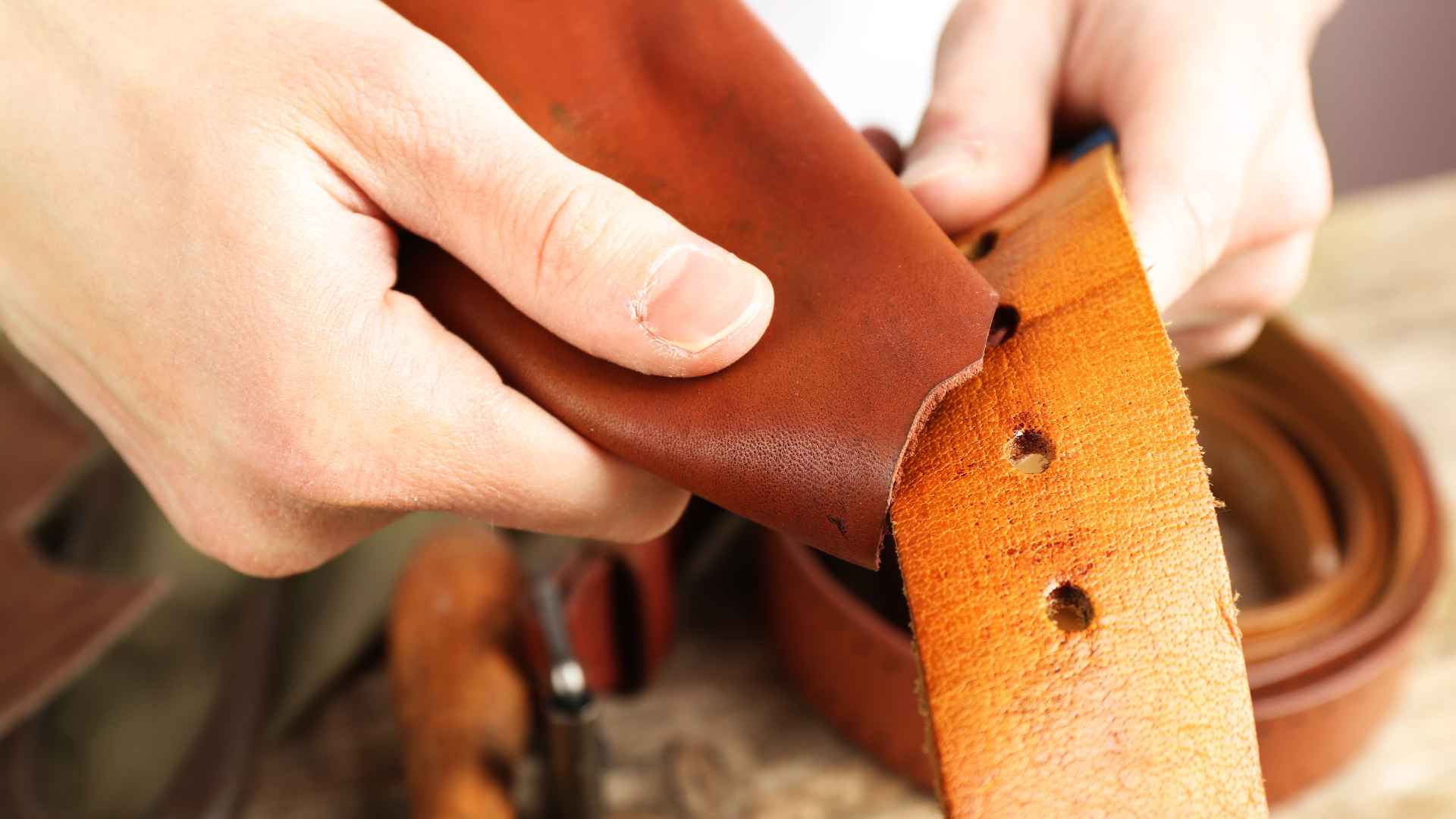
A well-worn belt buckle tells a story. The scratches, the patina, the slight wear along the edges all speak to years of real use. That history is part of what makes an old buckle worth keeping. So when something goes wrong, whether a stone falls out, a tongue breaks, or a finish starts looking rough, the instinct to repair rather than replace makes sense.
The good news is that most buckle damage is fixable. The more useful question is whether repair is the right call for your specific piece, or whether the damage points toward something deeper.
This guide covers the most common types of buckle damage, what can realistically be restored, and how to decide between repair and a full replacement.
Buckles take real wear. They press against belt loops, catch on jacket edges, get knocked against hard surfaces, and spend years exposed to sweat, moisture, and friction. Over time, that wear shows up in predictable ways.
Understanding what kind of damage you are dealing with is the first step toward figuring out what to do about it.
Surface scratches are the most common complaint and usually the least serious. They appear on the front plate of the buckle after contact with hard surfaces, keys, or rough materials. On a polished finish, scratches catch the light and become noticeable quickly. On an antiqued or oxidized finish, light scratches tend to blend in rather than stand out.
Most surface scratches can be buffed and refinished by a skilled silversmith without affecting the underlying engraving or structure of the piece. The result will not look brand new, but it will look significantly better.
A finish that has lost its shine or developed uneven coloring over years of wear is a different issue than a fresh scratch. This kind of wear happens gradually and often goes unnoticed until the buckle looks noticeably tired compared to how it once looked.
Repolishing a worn silver buckle can restore significant brightness, but it requires care. Aggressive polishing removes a thin layer of metal each time and can blur fine engraving detail if overdone. A light, careful polish using the right materials does far less damage than the wrong product applied too aggressively. Our guide on how to clean a silver buckle covers safe at-home options for maintenance between professional cleanings.
Stones work loose over time when the bezel holding them gets bent, compressed, or weakened through repeated impact. A loose stone is worth addressing quickly, since a stone that shifts position is a stone about to fall out entirely.
Resetting a loose stone is straightforward work for an experienced silversmith. The bezel gets tightened or rebuilt around the stone, and the stone gets secured back in place without damage to the surrounding metalwork.
Missing stones are slightly more involved. The replacement stone needs to match the original in size, cut, and color. Turquoise in particular varies widely between sources, so finding a close match sometimes takes more effort than the reset itself. If the original stone had sentimental value, it is worth mentioning that to the repair team before any work begins.
The tongue, which is the pivoting piece that pokes through the belt hole, takes more stress than any other part of the buckle. It bends, pivots, and bears the tension of holding the belt in place through every wear. Eventually, tongues crack, snap, or get bent out of alignment from a hard impact.
A broken tongue on an otherwise sound buckle is one of the clearest cases for repair over replacement. The tongue mechanism can usually be replaced or rebuilt without disturbing the front plate or engraving. The buckle comes back fully functional with the original design completely intact.
A bent tongue that has not yet snapped can often be carefully straightened, though the metal is weakened at the bend point and may need replacement anyway to prevent a future break.
Frames bend when a buckle takes a serious impact, gets caught under significant weight, or gets stored incorrectly under pressure for a long period. A slightly bent frame can sometimes be carefully straightened, but the outcome depends on the metal type and how severe the warp is.
Sterling silver has enough workability to allow careful reshaping in many cases. Harder or thinner metals are more likely to crack during straightening attempts. A silversmith can assess whether straightening is realistic or whether the frame needs to be rebuilt.
The loop on the back of the buckle, where the belt strap threads through, occasionally breaks from metal fatigue or a sharp impact. This is a structural failure that makes the buckle unwearable but does not affect the front plate or engraving at all.
Loop replacement is typically clean repair work. The old loop gets removed and a new one gets soldered in place. The finished piece functions exactly as it originally did.
Restoration is the right call when the damage is mechanical rather than structural, and when the buckle itself has value worth preserving. That value might be financial, in the case of a vintage or collectible piece, or it might be personal, in the case of a family heirloom or an award piece with real history behind it.
A few signs that restoration is the stronger choice.
The front plate and engraving are intact and undamaged
The damage is limited to one component, such as the tongue, loop, or a single stone
The buckle has sentimental or collector value that a replacement could not replicate
The original piece is high quality silver that will outlast a replacement if properly repaired
A buckle that has been in a family for decades, or one that marks a specific achievement or relationship, deserves the effort of restoration when restoration is possible. Replacing it with a new piece, even a beautiful one, does not carry the same history.
For more information on the repair services available and what the process typically involves, our frequently asked questions page covers common repair questions in detail.
Repair is not always the right answer. Some situations point clearly toward starting fresh.
If the front plate is severely damaged, deeply gouged, or structurally compromised, the cost of restoration can approach or exceed the cost of a new piece. In those cases, rebuilding makes more financial sense than patching something that will never fully recover.
If the buckle was low quality to begin with, thin plating, cast hardware, or base metal construction, repair work often cannot bring it up to a standard worth maintaining. The materials simply do not hold up to the same repair techniques that work well on sterling silver.
If the original design no longer fits the owner's life, a repair that restores function but not meaning may not be worth pursuing. A new custom piece built around current preferences and circumstances can serve the person better than a repaired piece they have outgrown.
The best argument for repairing a well-made buckle is also the best argument for buying quality in the first place. A sterling silver buckle built with proper construction can be repaired, refinished, and restored multiple times over decades of wear. A cheap piece often cannot be repaired at all once it fails.
This is why craftsmanship matters well beyond the day of purchase. A buckle made with real silver, proper engraving depth, and sound hardware construction retains its repairability. It stays worth fixing because the underlying quality is still there.
Our custom western belt buckle company page covers the construction standards that go into every piece built at A Cut Above, which gives useful context for understanding what makes a buckle worth repairing versus replacing.
The first step for any damaged buckle is a proper assessment. Surface-level damage that looks serious is often straightforward to address. Damage that looks minor can sometimes point to deeper structural issues that change the repair calculus.
Bringing the buckle to a silversmith with real experience in western buckle repair gives you an honest read on what is possible, what it will cost, and whether the result is worth pursuing. That conversation costs nothing and removes the guesswork from a decision that matters.
For more on buckle care, repair, and craftsmanship, visit our knowledge hub. To connect with the team at A Cut Above Buckles directly, head to A Cut Above Buckles and reach out with the details of your piece.

© Copyrights 2026 A Cut Above Buckles


